

As cities across Canada continue investing in climate resilience, livability, and healthier public spaces, urban canopy is becoming an increasingly important part of long-term city planning. The case for investment is compelling: urban canopy returns significant environmental, economic, and public health benefits over time.
But there is an important distinction often missing from the conversation: planting trees is not the same as delivering canopy.
The Difference Between Planting Trees and Delivering Canopy
Planting initiatives are visible and easy to measure, but long-term canopy performance is far more difficult to achieve — and ultimately far more important.
A newly planted tree delivers relatively little environmental benefit. The real return comes years later, when that tree has survived long enough to mature into a healthy canopy that cools streets, manages stormwater, improves air quality, and reduces urban heat.
The question cities need to be asking is not how many trees were planted last year. It is how many are still growing decades later.
The Survival Problem
The challenge is not a lack of ambition to plant trees, but the conditions in which they are expected to grow.
A young tree planted in a constrained urban environment may never reach maturity if the conditions required for healthy root development are not considered at the design stage — before a single sapling goes into the ground.
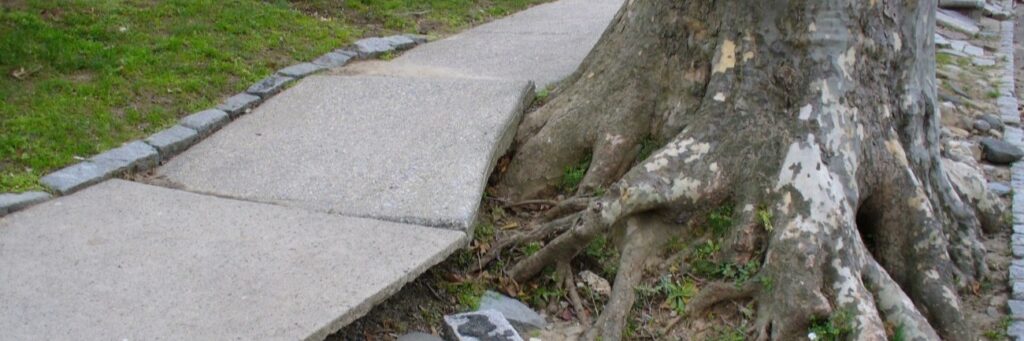
Below the surface, urban trees compete for space with utilities, drainage systems, transportation infrastructure, and the compacted soils required to support surrounding pavement. Even where planting programs are well intentioned, these constraints often prevent trees from reaching maturity.
A successful urban tree depends on a large, healthy root system supported by high-quality, uncompacted soil. Without appropriate below-ground conditions, even resilient species will struggle.
For trees to become lasting infrastructure rather than short-term features, their root environment must be designed to support long-term growth.
When those conditions are not met, the outcome is predictable: trees become stressed, decline prematurely, and fail long before they deliver meaningful canopy. Cities then cycle back to replacement planting programs that repeat the same conditions — and produce the same results.
The problem is rarely the tree itself. It is the environment surrounding it underground.
Why Mature Trees Matter
Cities are increasingly relying on trees to help address some of the most pressing urban challenges of the coming decades.
Mature canopy reduces urban heat, intercepts stormwater, improves air quality, supports biodiversity, and contributes to healthier, more comfortable public spaces. These benefits compound with every year a tree survives.
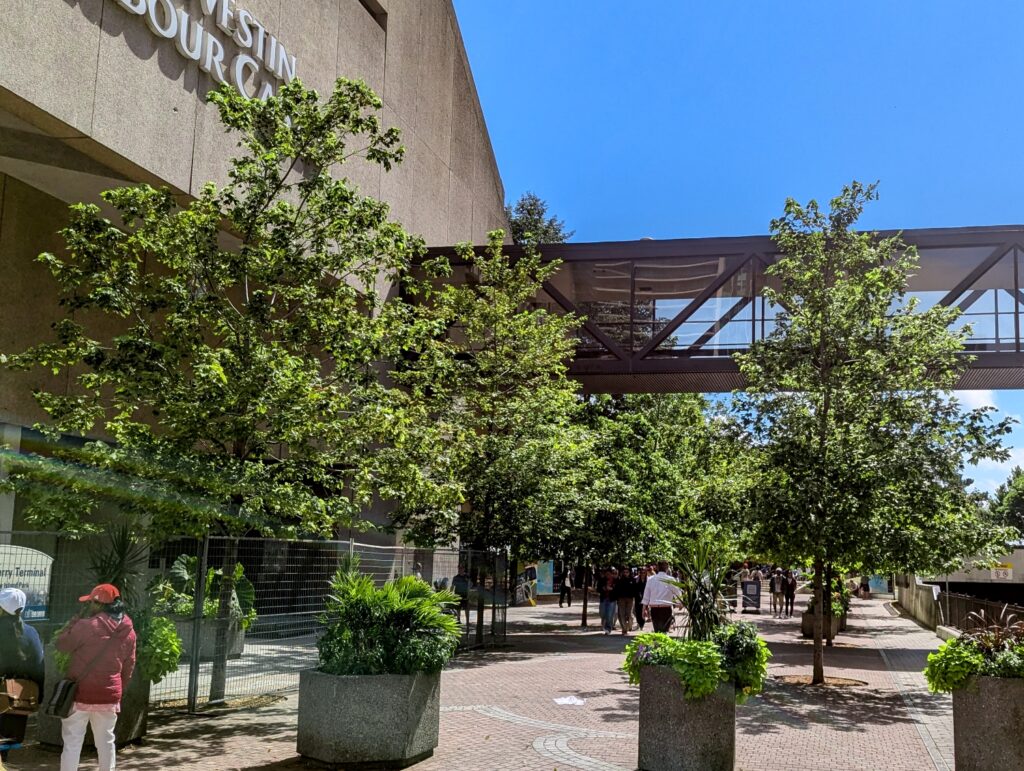
Mature urban canopy also contributes to more walkable, livable communities by creating shaded streets, improving pedestrian comfort, and supporting the overall quality of the public realm.
As climate pressures intensify, cities are increasingly recognizing urban canopy as essential infrastructure that supports climate adaptation, public health, and long-term urban livability.
If trees are expected to function as resilience infrastructure, the systems supporting them must also be treated as infrastructure.
That means soil volume, stormwater integration, utility coordination, and lifecycle performance are not secondary considerations in a planting specification. They are fundamental to whether a canopy strategy succeeds over time.
Designing for Long-Term Survival
The most effective urban canopy programs are not necessarily the ones that plant the most trees. They are the ones that design for long-term survival from the start — treating every planting as a decades-long infrastructure investment rather than an annual count.
This requires a shift toward lifecycle thinking and coordinated below-ground design.
Providing adequate rootable soil volume, reducing compaction, integrating stormwater systems, and coordinating around utilities all play a critical role in determining whether a tree survives long enough to mature into healthy canopy.
None of those decisions can be made after the pavement goes down.
The Future of Urban Canopy
As cities continue investing in climate resilience, sustainability, and healthier urban environments, the conversation is already shifting from “how many trees can we plant?” to “how do we deliver long-term canopy performance?”
Cities such as Toronto and Vancouver are increasingly integrating urban canopy into broader resilience, stormwater, and public realm planning initiatives.
That shift will define which cities successfully achieve long-term canopy performance in the decades ahead.
Healthy urban canopy does not happen by accident. It is designed, coordinated, and invested in — from the ground up.
