


Each winter, towns and cities adopt a more festive character. Streets are illuminated, markets appear, and in many public squares a temporary Christmas tree becomes the focal point for seasonal gatherings. These installations bring warmth and atmosphere, but by early January they are dismantled and the space returns to a familiar hard, grey condition.
This cycle reflects a wider pattern in urban design. Temporary interventions can transform how a place feels, but their impact is short lived. When greenery is removed, the absence is immediately noticeable. The contrast highlights the importance of permanent trees that deliver beauty, function and environmental value throughout the year, rather than for a few weeks at a time.
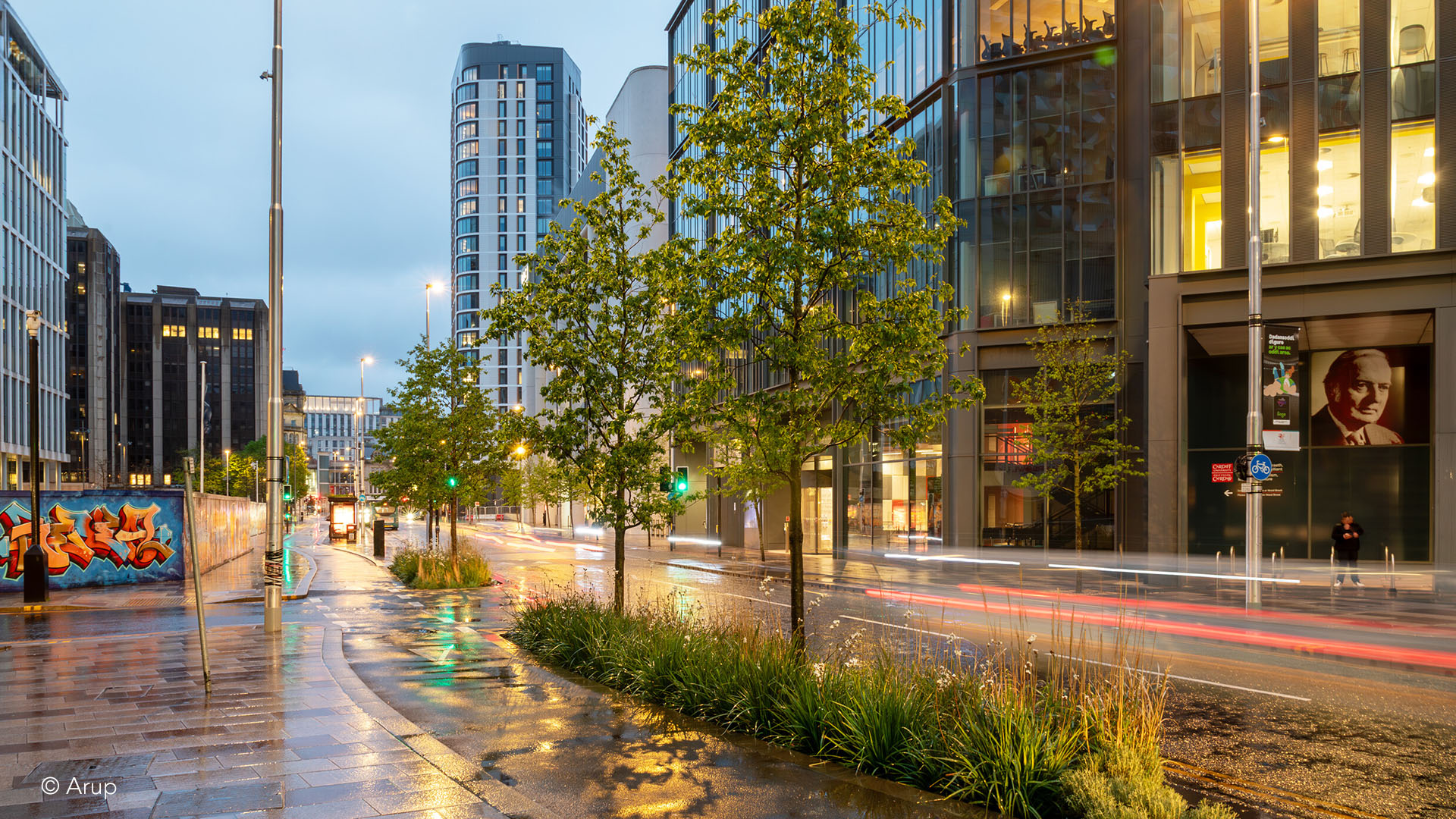
Urban trees are a core part of the infrastructure that supports thriving towns and cities. When provided with the right conditions, they offer decades of benefits for people and place. GreenBlue Urban has long championed this approach, demonstrating how modern solutions such as soil cell systems and SuDS tree pits enable trees in streetscapes not just to survive, but to establish, grow and perform as long-term assets.
The Lasting Value of Urban Trees
A mature street tree provides environmental, social and ecological benefits, including cleaner air, increased comfort, wildlife support, improved wellbeing and a shared sense of place. These benefits are expressed throughout the year. A healthy tree cools the air in summer, shelters pedestrians from winter winds, offers blossom in spring and brings colour in autumn. Streets planted with large, well-established trees consistently feel more welcoming and are places where people choose to spend time.
Seasonal festive trees offer a brief glimpse of how greenery can soften and enliven urban spaces. Their removal often reveals how stark streets can feel when living vegetation is absent. While temporary trees play an important role in seasonal celebrations, they cannot deliver the enduring contribution of permanently planted urban trees that become embedded in the character of a place and continue to enrich it year after year.

Why Urban Trees Struggle to Establish
The challenge is not a lack of ambition to plant trees, but the conditions in which they are expected to grow. Urban soils are frequently compacted by traffic and footfall, fragmented by underground services and limited in volume. Many street trees are confined to small pits with little access to air or water, restricting root development from the outset.
Even where planting is well intentioned, these constraints often prevent trees from reaching maturity. A successful urban tree depends on a large, healthy root system supported by high-quality, uncompacted soil. Without appropriate below-ground conditions, even resilient species will struggle. For trees to become lasting infrastructure rather than short-term features, their root environment must be designed to support long-term growth.
How Soil Cell Systems Transform Urban Tree Planting
Soil cell systems address these challenges by providing a stable, load-bearing structure that protects soil from compaction beneath pavements and carriageways. This allows footpaths, cycle routes, seating areas and traffic loads to be accommodated above ground, while below ground tree roots can expand into a connected volume of healthy soil.
Integrated aeration and irrigation help replicate the conditions of a natural forest floor, enabling roots to access oxygen and moisture. Soil cell systems also offer flexibility for designers, as they can be configured around underground utilities and adapted to constrained street environments. This approach allows trees to achieve the size and longevity required to deliver meaningful benefits over time.
SuDS Tree Pits and the Need for Better Water Management
As climate change brings heavier and more frequent rainfall, traditional drainage networks are increasingly under pressure. In many towns and cities this results in surface water flooding that disrupts movement and damages infrastructure. SuDS tree pits provide a practical response by allowing rainfall to be captured, slowed and filtered within the tree pit before it infiltrates the ground or enters the wider drainage system.
This reduces pressure on sewers while providing trees with a more consistent water supply, supporting healthy growth and improving resilience during dry periods. SuDS tree pits demonstrate how tree planting and sustainable drainage can work together, delivering both environmental and engineering benefits within the same footprint.
Why Permanent Green Infrastructure Matters Now
Towns and cities are facing rising temperatures, increased rainfall and declining air quality. Mature trees are among the most effective natural tools available to help address these challenges. They reduce urban heat, filter pollutants, support biodiversity and create more comfortable public spaces. They also encourage walking, social interaction and a stronger connection between people and place.
These outcomes depend on time and continuity. They cannot be delivered by short-term installations or seasonal displays. Only trees that are properly established and allowed to mature can provide the scale of benefit required to support climate resilience and long-term placemaking.
Building a Legacy Instead of a Temporary Display
Festive trees will always be part of winter traditions, and their presence reminds us how much greenery can transform the feel of a street or square. The challenge is to extend that sense of warmth and vitality beyond the festive season.
By investing in soil cell systems and SuDS tree pits, towns and cities can ensure that trees planted today have the opportunity to grow into mature, resilient assets. These technologies give designers and local authorities the confidence to integrate trees into even the most constrained environments, ensuring that every planting contributes to climate adaptation, biodiversity and the long-term quality of urban spaces.
Urban trees are not just for Christmas. They are essential components of sustainable, resilient towns and cities, deserving the same level of planning, design and investment as any other form of infrastructure. As seasonal decorations are removed each winter, there is an opportunity to think beyond temporary displays and commit to permanent greenery that delivers value every day of the year.
