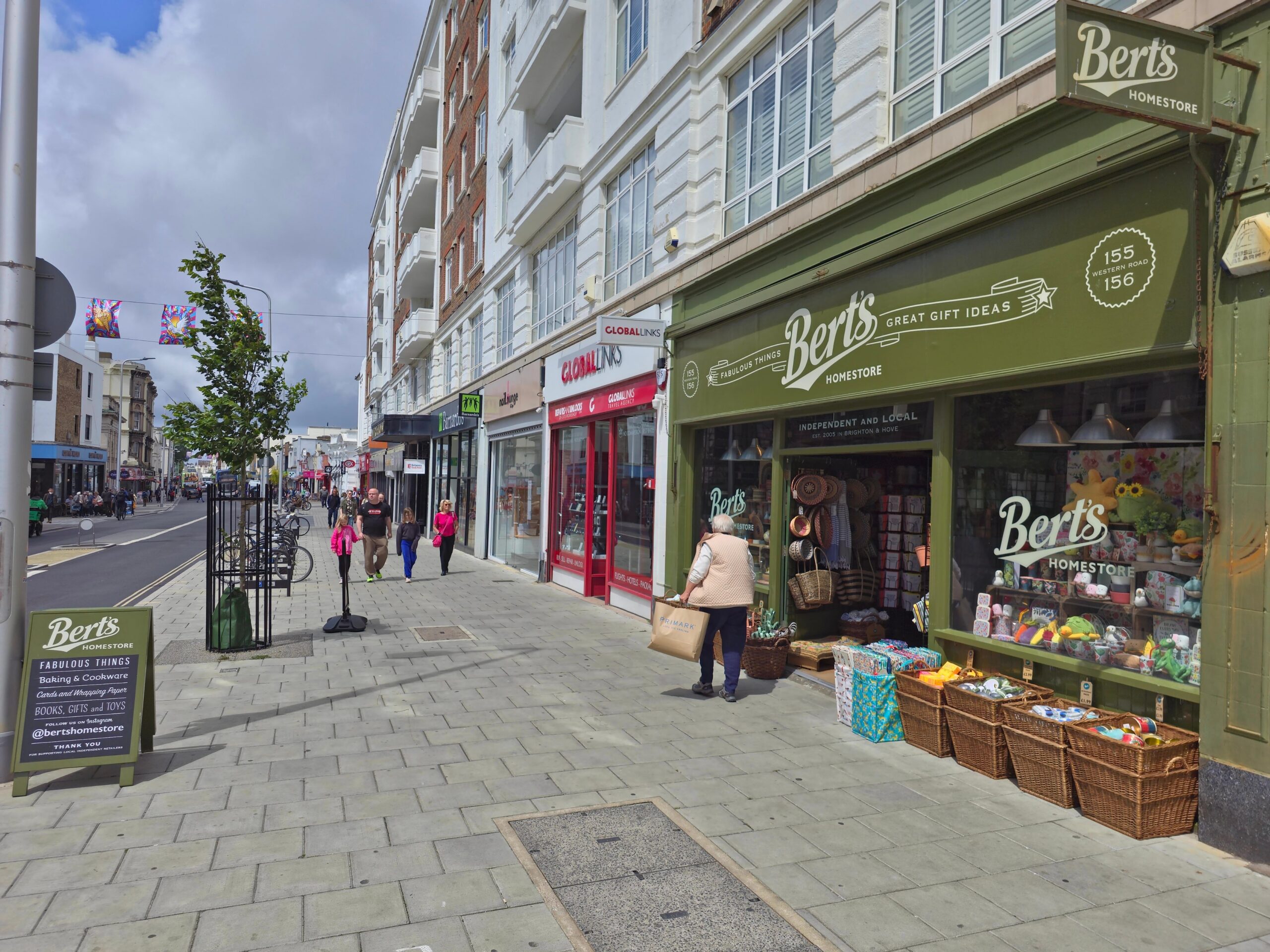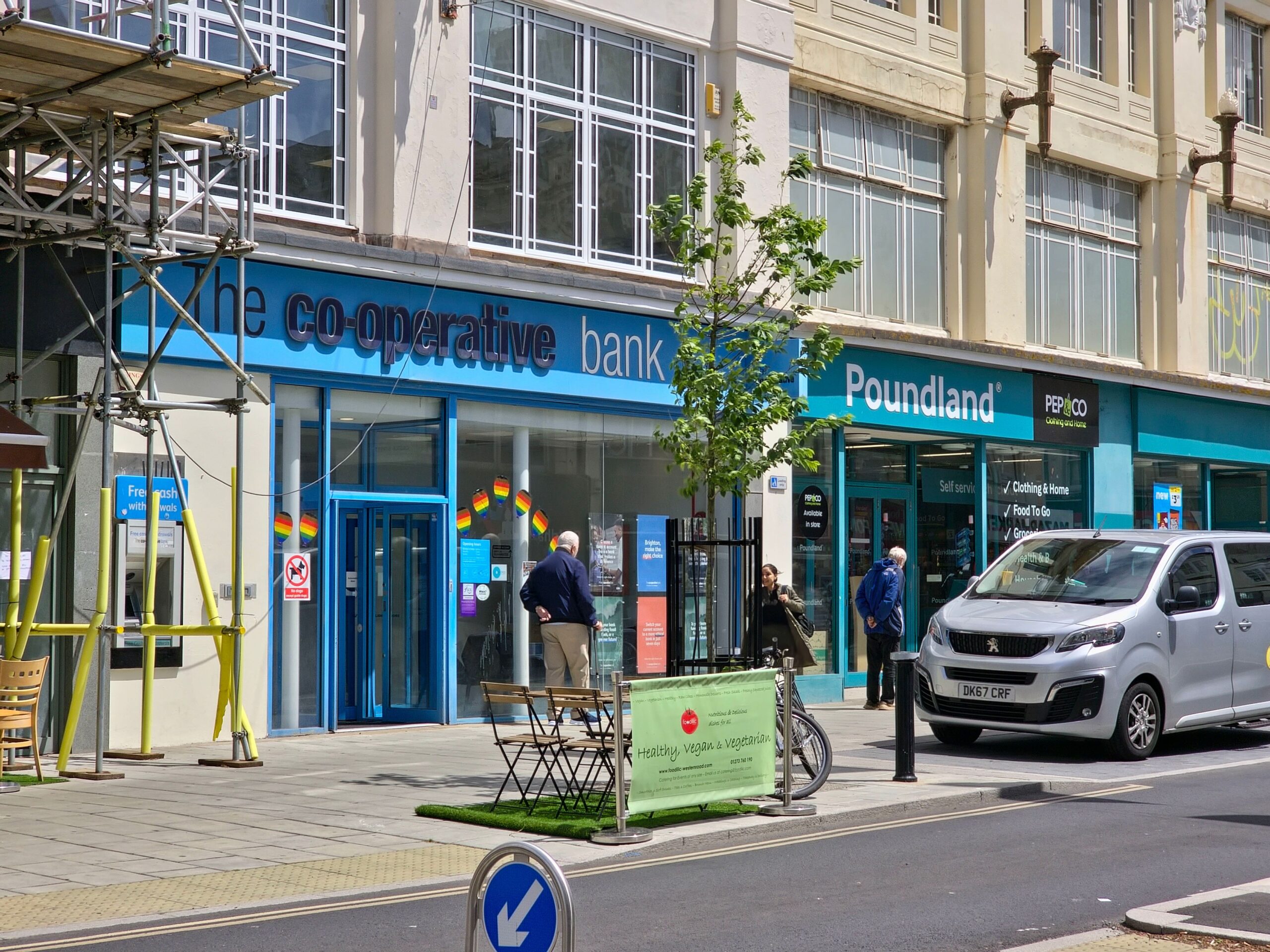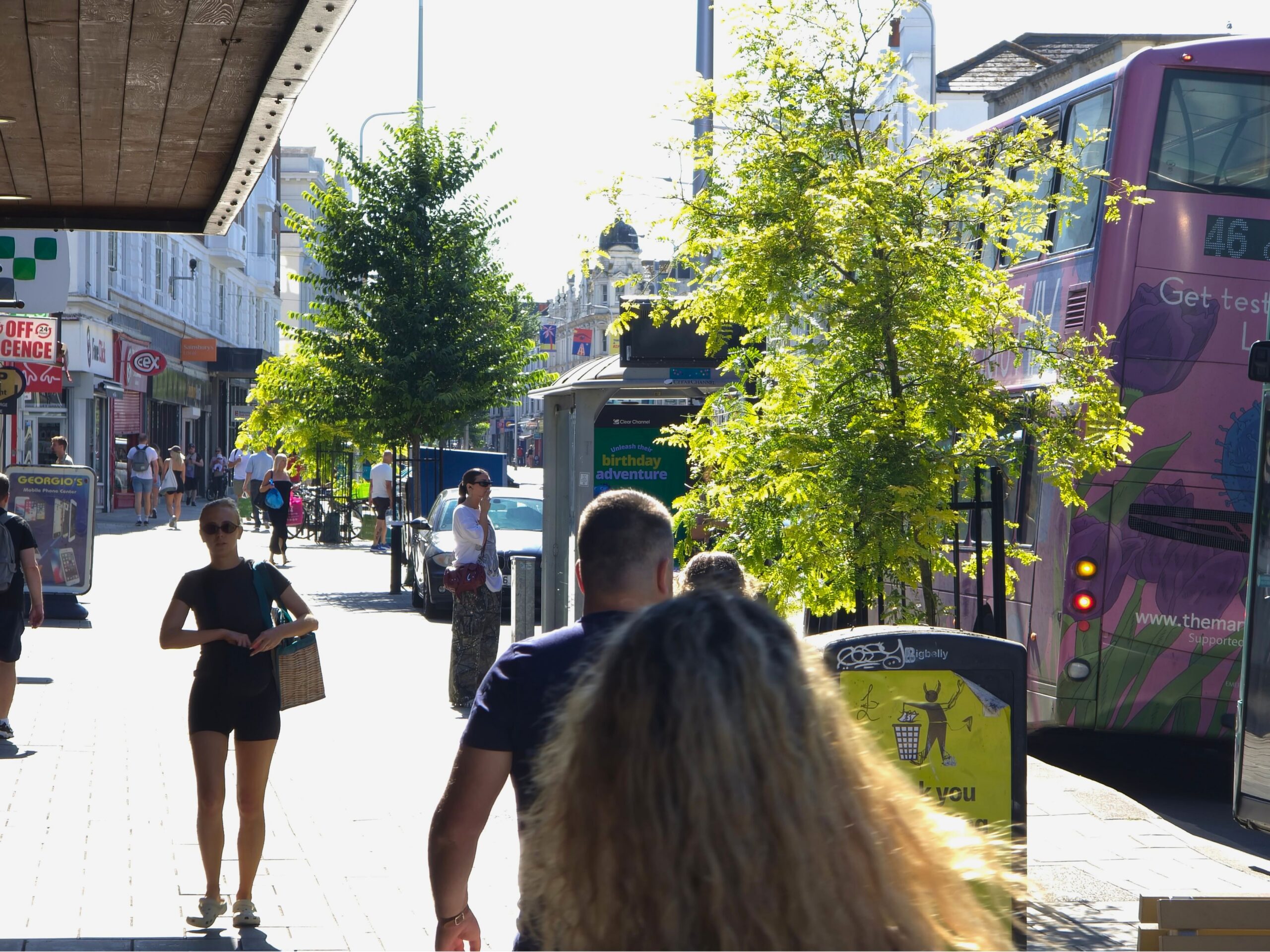
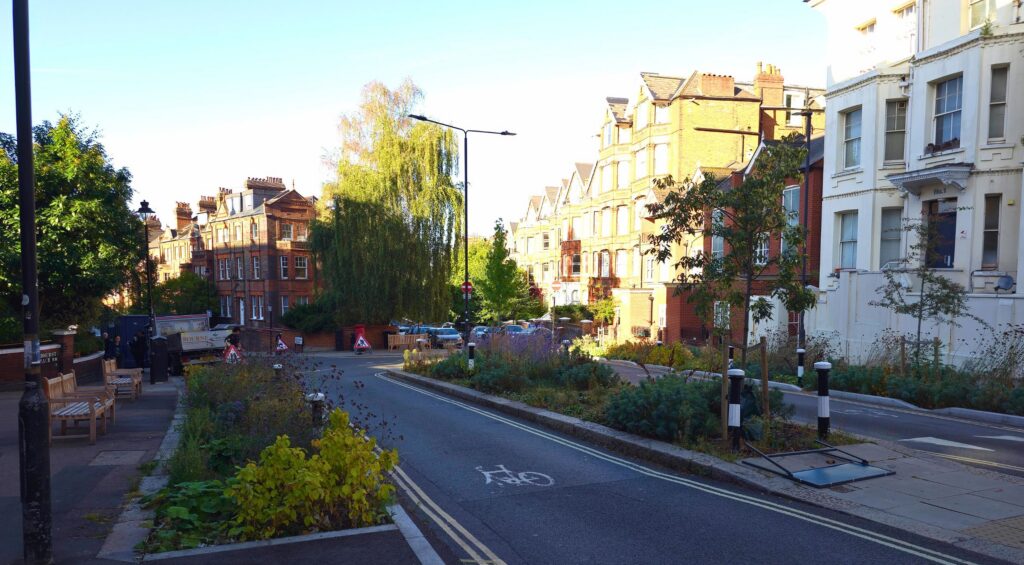


In the heart of Brighton’s bustling retail district, Western Road has long served as a key area of the city for shoppers, commuters, and local residents. In 2023, Brighton & Hove City Council embarked on an ambitious regeneration scheme to improve the functionality, safety, and visual appeal of this heavily used thoroughfare.
Delivered by contractors RJ Dance and urban designers at Project Centre, the project was part of a wider strategy to enhance the public realm, improve sustainable transport infrastructure and contribute to the city’s carbon neutrality ambitions.
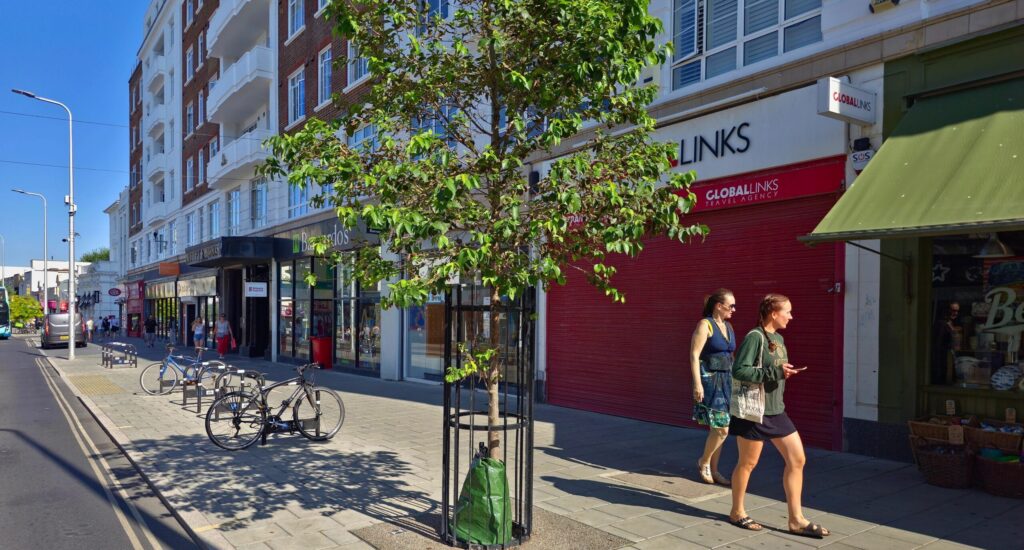
Among the most sensitive and publicly scrutinised elements of the overall scheme was the replacement of two mature street trees: an Ash and a Robinia located just west of Hampton Road. Both trees had been found to be in poor health. The Ash was exhibiting signs of canopy decline, a likely result of either disease or environmental stress, and was deemed unsuitable for the local conditions. The Robinia, meanwhile, was significantly stunted, its growth inhibited by a steel tree frame that had begun damaging its roots. Some roots had also begun to lift from the pavement, creating a trip hazard.
Given the busy nature of Western Road, with its high levels of footfall and public transport usage, these trees were no longer safe and needed to be removed. The council’s decision was taken with careful consideration and with a commitment to not only replace the trees but to significantly improve the conditions in which new ones would be planted.
Historically, urban street trees have a much shorter life expectancy than those in parkland or natural settings. Compacted soils, constrained rooting environments, air pollution, mechanical damage and conflicts with underground infrastructure all contribute to their decline. To overcome these challenges and give the replacement trees the best chance of long-term survival, the project incorporated a suite of urban tree planting products from GreenBlue Urban.
Project
Location
Contractor
Landscape Architect
In the heart of Brighton’s bustling retail district, Western Road has long served as a key area of the city for shoppers, commuters, and local residents. In 2023, Brighton & Hove City Council embarked on an ambitious regeneration scheme to improve the functionality, safety, and visual appeal of this heavily used thoroughfare.
Delivered by contractors RJ Dance and urban designers at Project Centre, the project was part of a wider strategy to enhance the public realm, improve sustainable transport infrastructure and contribute to the city’s carbon neutrality ambitions.
Among the most sensitive and publicly scrutinised elements of the overall scheme was the replacement of two mature street trees: an Ash and a Robinia located just west of Hampton Road. Both trees had been found to be in poor health. The Ash was exhibiting signs of canopy decline, a likely result of either disease or environmental stress, and was deemed unsuitable for the local conditions. The Robinia, meanwhile, was significantly stunted, its growth inhibited by a steel tree frame that had begun damaging its roots. Some roots had also begun to lift from the pavement, creating a trip hazard.
Given the busy nature of Western Road, with its high levels of footfall and public transport usage, these trees were no longer safe and needed to be removed. The council’s decision was taken with careful consideration and with a commitment to not only replace the trees but to significantly improve the conditions in which new ones would be planted.
Historically, urban street trees have a much shorter life expectancy than those in parkland or natural settings. Compacted soils, constrained rooting environments, air pollution, mechanical damage and conflicts with underground infrastructure all contribute to their decline. To overcome these challenges and give the replacement trees the best chance of long-term survival, the project incorporated a suite of urban tree planting products from GreenBlue Urban.
Project
Location
Contractor
Landscape Architect
Project
Location
Contractor
Landscape Architect
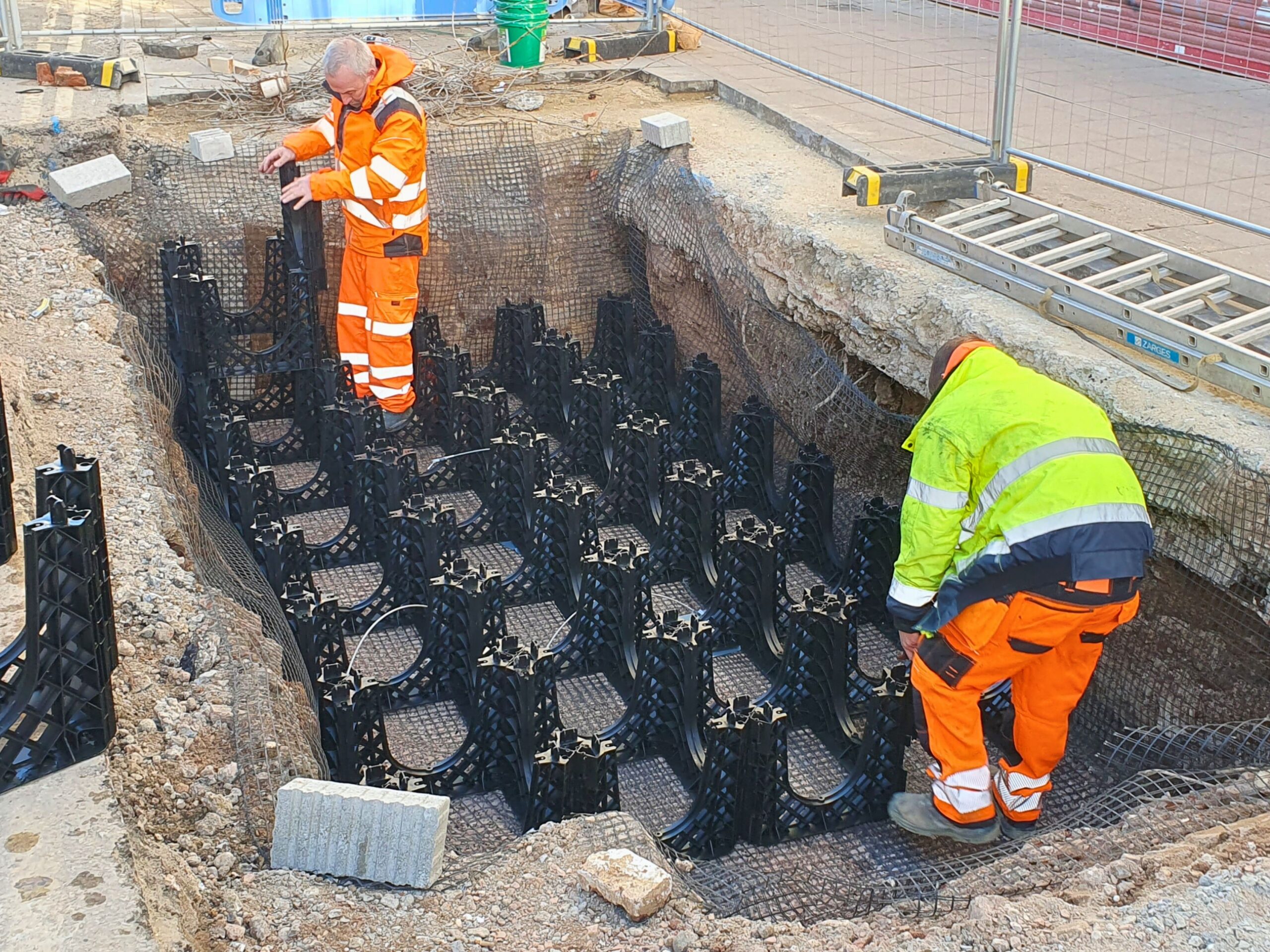
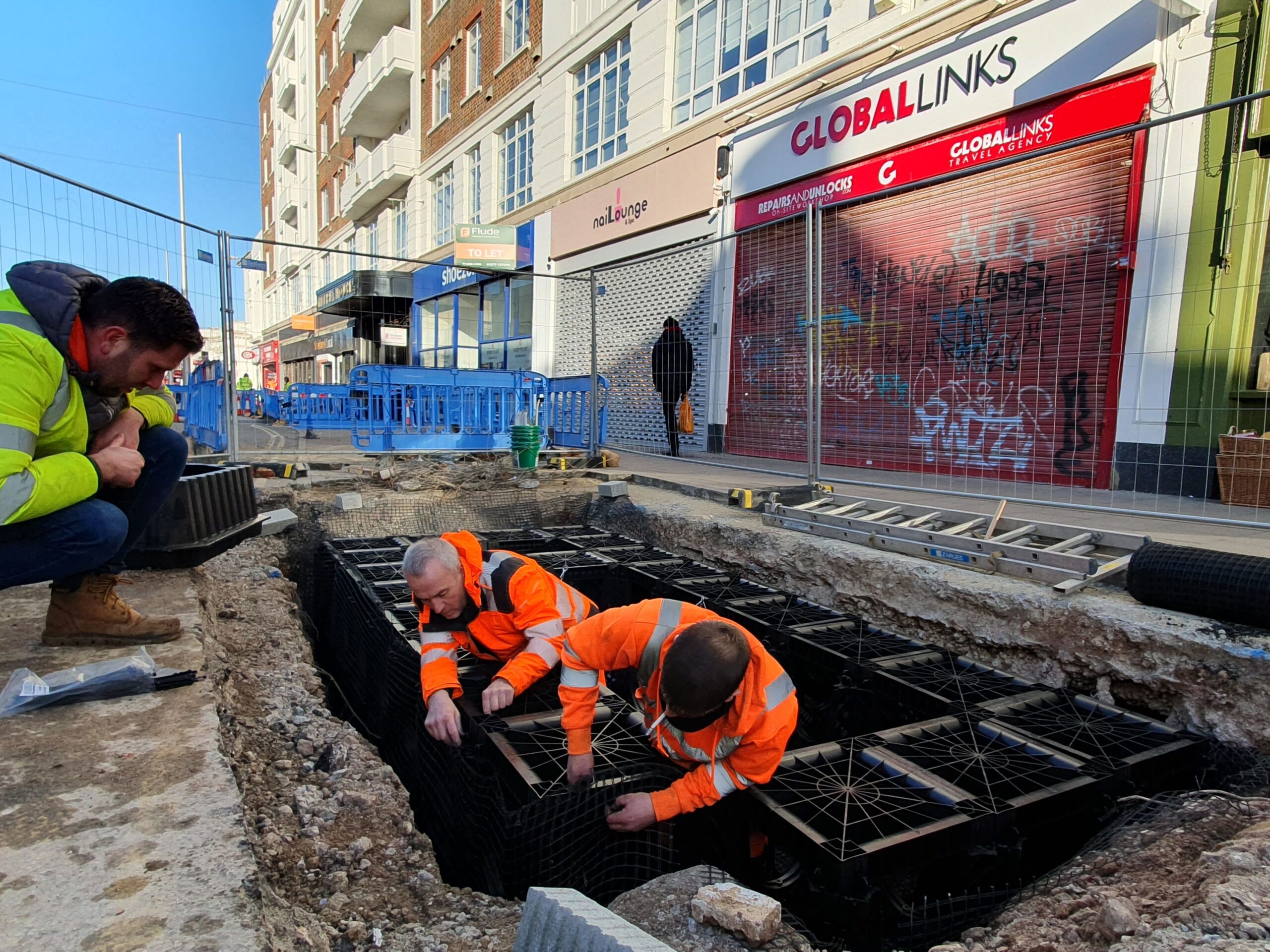
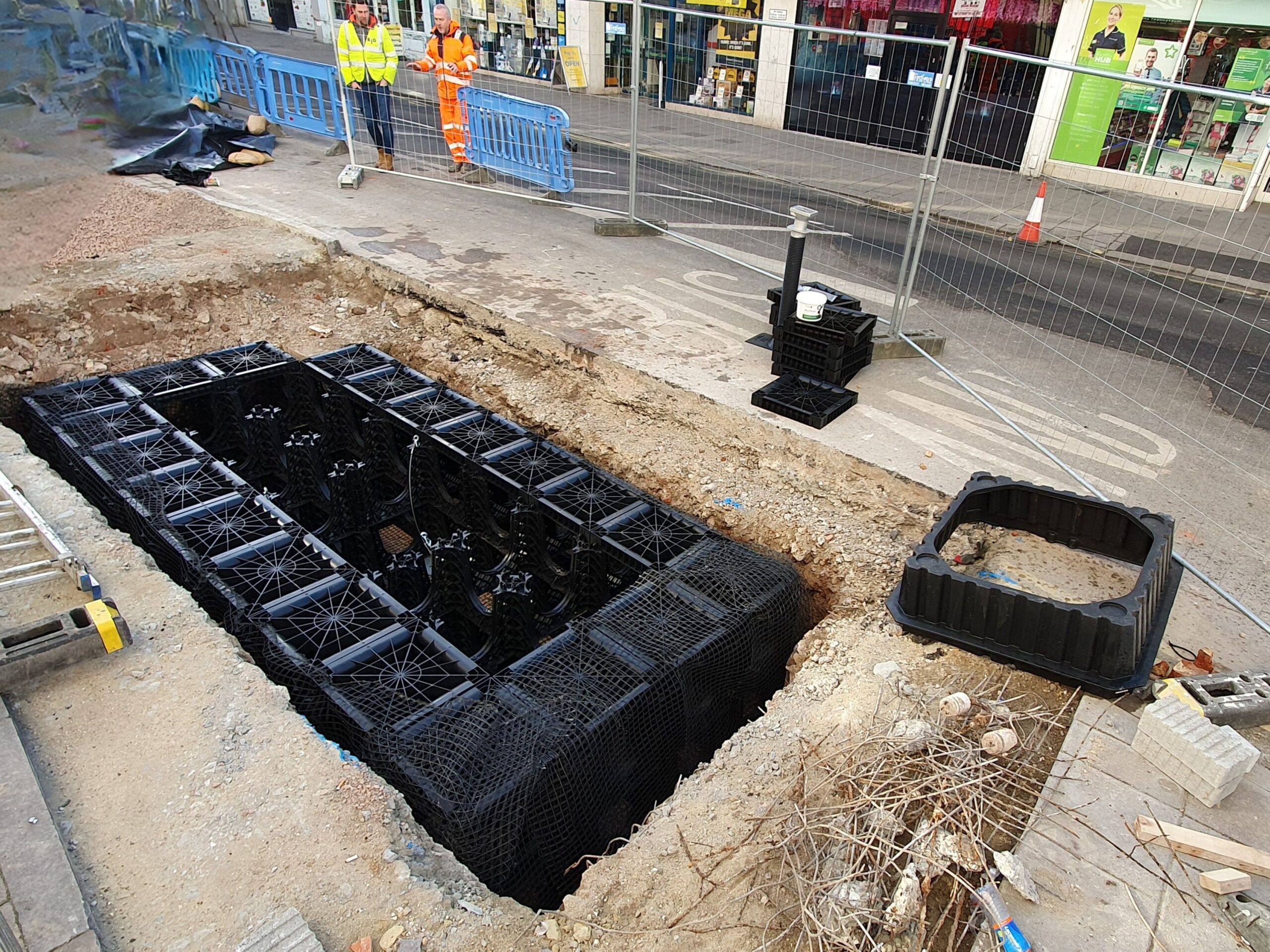
At the core of the new tree planting strategy was the use of the RootSpace soil cell system. This modular, load-bearing structure was installed beneath the pavement to provide uncompacted soil volume for the new tree roots to grow into. In conventional street tree planting, roots are often confined to small pits of heavily compacted soil, which restricts their development and weakens the tree over time. By contrast, RootSpace allows the pavement above to remain stable and accessible, while giving trees access to a generous volume of healthy soil below. This creates a much more natural rooting environment, even in the midst of hard surfacing.
To complement RootSpace, ReRoot Barrier with ribs were used to guide root growth downward and away from critical infrastructure, helping to prevent future conflicts with utility lines and paving. This proactive management reduces the likelihood of costly damage in the future and helps maintain the integrity of both the urban tree and its surrounding environment.
To support the health of the trees during the crucial early years following planting, ArborVent irrigation and aeration systems were integrated into the design. These inlets allow oxygen and water to be delivered directly to the root zone, reducing drought stress and helping the tree become quickly established. In an urban environment where rainfall does not always penetrate hard surfaces effectively, ArborVent ensures that the trees receive the resources they need to thrive.
Given the high pedestrian footfall along Western Road, the project team also incorporated decorative tree grilles and protective guards from GreenBlue Urban. These not only offer visual consistency with the urban design of the area but serve the vital function of protecting the young trees from damage by bikes, trolleys, or vandalism. The grilles also help to direct rainwater into the tree pits, contributing to a sustainable drainage approach.
At the core of the new tree planting strategy was the use of the RootSpace soil cell system. This modular, load-bearing structure was installed beneath the pavement to provide uncompacted soil volume for the new tree roots to grow into. In conventional street tree planting, roots are often confined to small pits of heavily compacted soil, which restricts their development and weakens the tree over time. By contrast, RootSpace allows the pavement above to remain stable and accessible, while giving trees access to a generous volume of healthy soil below. This creates a much more natural rooting environment, even in the midst of hard surfacing.
To complement RootSpace, ReRoot Barrier with ribs were used to guide root growth downward and away from critical infrastructure, helping to prevent future conflicts with utility lines and paving. This proactive management reduces the likelihood of costly damage in the future and helps maintain the integrity of both the urban tree and its surrounding environment.
To support the health of the trees during the crucial early years following planting, ArborVent irrigation and aeration systems were integrated into the design. These inlets allow oxygen and water to be delivered directly to the root zone, reducing drought stress and helping the tree become quickly established. In an urban environment where rainfall does not always penetrate hard surfaces effectively, ArborVent ensures that the trees receive the resources they need to thrive.
Given the high pedestrian footfall along Western Road, the project team also incorporated decorative tree grilles and protective guards from GreenBlue Urban. These not only offer visual consistency with the urban design of the area but serve the vital function of protecting the young trees from damage by bikes, trolleys, or vandalism. The grilles also help to direct rainwater into the tree pits, contributing to a sustainable drainage approach.
To ensure the newly planted trees would remain secure and upright while establishing their roots, below-ground guying systems were also employed. These systems provide stable, discreet anchorage without posing trip hazards or cluttering the public realm.
The trees chosen for the project were carefully selected for their resilience and suitability to street conditions. In addition to replacing the two trees that had been removed, the wider scheme also included the planting of ten additional trees, all benefitting from the same level of care, infrastructure and design foresight.
Western Road’s renewal brought multiple enhancements to the area. Over an 18-month period, the street was completely resurfaced, pedestrian areas widened and re-paved, crossings improved, and new seating, bus shelters, cycle parking and lighting installed. The works were funded through a combination of national and local funding streams, including the Department for Transport’s Active Travel Fund, the Bus Service Improvement Plan, and Brighton & Hove’s own Carbon Neutral Fund. The result is a significantly enhanced streetscape that not only looks better but functions better, encouraging more walking, cycling, and public transport use – and with a greatly improved canopy cover to boot.
For Brighton & Hove City Council, the regeneration of Western Road is both a practical and symbolic investment. It responds directly to public feedback gathered during a 2021 consultation, where residents called for more trees, better pedestrian crossings, and a safer, more welcoming environment. With the help of GreenBlue Urban’s tree pit systems and infrastructure, the new trees on Western Road have been given every opportunity to grow into strong, mature features of the urban landscape, providing shade, biodiversity and environmental benefits for generations to come.
To ensure the newly planted trees would remain secure and upright while establishing their roots, below-ground guying systems were also employed. These systems provide stable, discreet anchorage without posing trip hazards or cluttering the public realm.
The trees chosen for the project were carefully selected for their resilience and suitability to street conditions. In addition to replacing the two trees that had been removed, the wider scheme also included the planting of ten additional trees, all benefitting from the same level of care, infrastructure and design foresight.
Western Road’s renewal brought multiple enhancements to the area. Over an 18-month period, the street was completely resurfaced, pedestrian areas widened and re-paved, crossings improved, and new seating, bus shelters, cycle parking and lighting installed. The works were funded through a combination of national and local funding streams, including the Department for Transport’s Active Travel Fund, the Bus Service Improvement Plan, and Brighton & Hove’s own Carbon Neutral Fund. The result is a significantly enhanced streetscape that not only looks better but functions better, encouraging more walking, cycling, and public transport use – and with a greatly improved canopy cover to boot.
For Brighton & Hove City Council, the regeneration of Western Road is both a practical and symbolic investment. It responds directly to public feedback gathered during a 2021 consultation, where residents called for more trees, better pedestrian crossings, and a safer, more welcoming environment. With the help of GreenBlue Urban’s tree pit systems and infrastructure, the new trees on Western Road have been given every opportunity to grow into strong, mature features of the urban landscape, providing shade, biodiversity and environmental benefits for generations to come.

Please wait while you are redirected to the right page...