


As cities continue to expand and the drive for greener, more liveable environments grows, the importance of healthy urban trees has never been clearer.
Yet, for all the investment in tree planting schemes, long-term success rates vary dramatically. Some schemes thrive for decades, while others fail within a few years.
What often separates success from failure is not the choice of species or the design of the streetscape, but the condition and structure of the soil itself.
Understanding the Role of Soil Structure
In natural environments, soil is typically loose, well-aerated and full of organic life. Roots can expand freely, and water infiltrates and drains naturally. Urban soils, however, are often not so accommodating. Space is limited, compaction is high and surrounding infrastructure restricts how soil behaves.
For decades, engineers, arborists and landscape architects have explored ways to reconcile the conflict between urban design requirements and tree biology. Some systems have aimed to recreate natural soil conditions within structural frameworks, while others rely on specially designed mixes that offer both strength and porosity. All of these approaches share a single goal: to provide tree roots with the space and air they need to function properly.
The Science of Uncompacted Soil
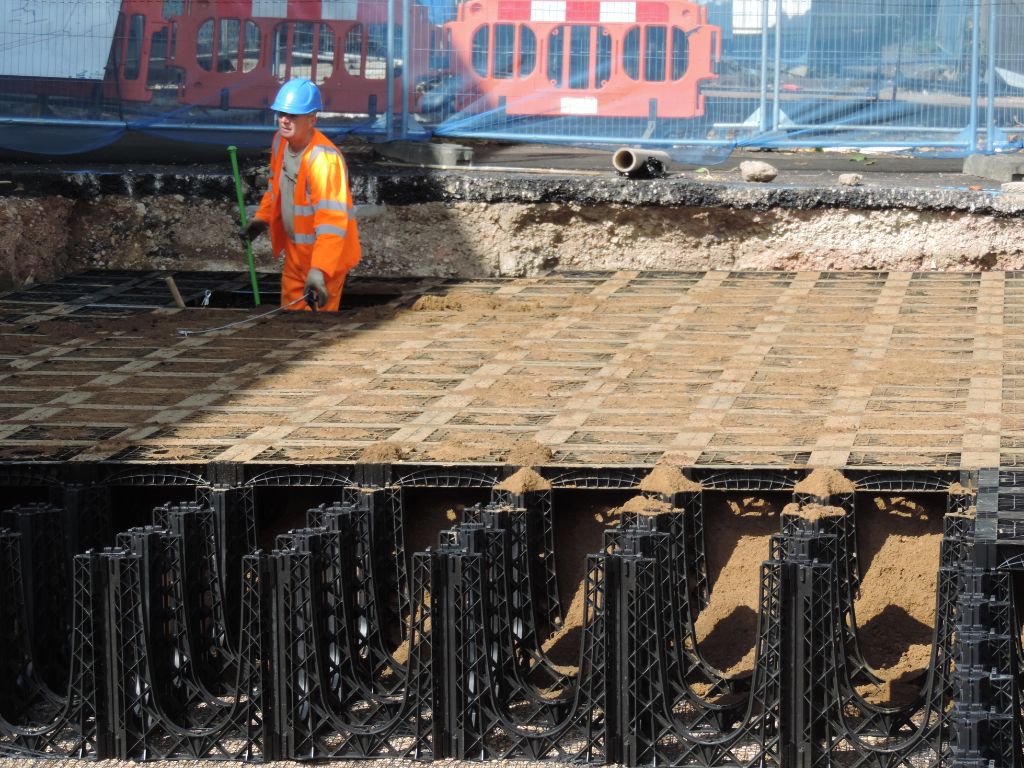
Extensive research and decades of field data consistently demonstrate that uncompacted soil provides the most reliable foundation for healthy, long-lived urban trees. When soil remains uncompacted within a supporting structure or cell system, it maintains natural pore spaces that allow for:
- unrestricted root growth;
- balanced moisture retention and drainage;
- high levels of biological activity.
In contrast, compacted soil, whether by design or necessity, loses porosity, which limits oxygen availability and restricts root expansion. The result is stunted growth, reduced drought resilience and greater reliance on artificial watering even after the initial establishment phase.
Volume Efficiency and Root Performance
One of the lesser-discussed advantages of uncompacted soil systems is efficiency of volume. Because the entire soil mass remains biologically active and accessible to roots, trees can achieve optimal growth in as little as half the soil volume required by compacted systems or mixes designed for structural strength.
In practice, this could mean:
- half the excavation depth;
- half the material movement;
- half the associated carbon footprint.
This efficiency does not compromise performance. Our own successful schemes have shown that trees in uncompacted soil can reach maturity faster and require less remedial maintenance over time.
Watering and Maintenance Realities
Another key difference lies in ongoing maintenance. Trees growing in heavily engineered or compacted substrates often depend on lifetime irrigation regimes to compensate for poor moisture availability. These systems can succeed in the short term, but they bring long-term costs both financially and environmentally.
By contrast, trees planted in uncompacted soil systems develop self-sustaining root networks. Their roots extend deeper and wider, accessing natural moisture reserves. Once established, these trees don’t often require artificial watering, even during prolonged dry periods. This approach saves water and energy while reducing maintenance demands on local authorities and developers.
Sustainability and Carbon Considerations
In an era where every project is assessed for its carbon footprint, soil systems play a surprisingly significant role. Excavation, transportation and material handling all add to a project’s embodied carbon. Because uncompacted soil systems require less excavation and material import, their carbon impact is substantially lower than that of systems needing greater volumes or complex mixes.
By ensuring trees reach maturity and live longer, these systems also increase carbon sequestration benefits. A single healthy urban tree can absorb hundreds of kilograms of carbon dioxide over its lifetime, benefits that are lost entirely when trees fail prematurely.
Lessons from the Field
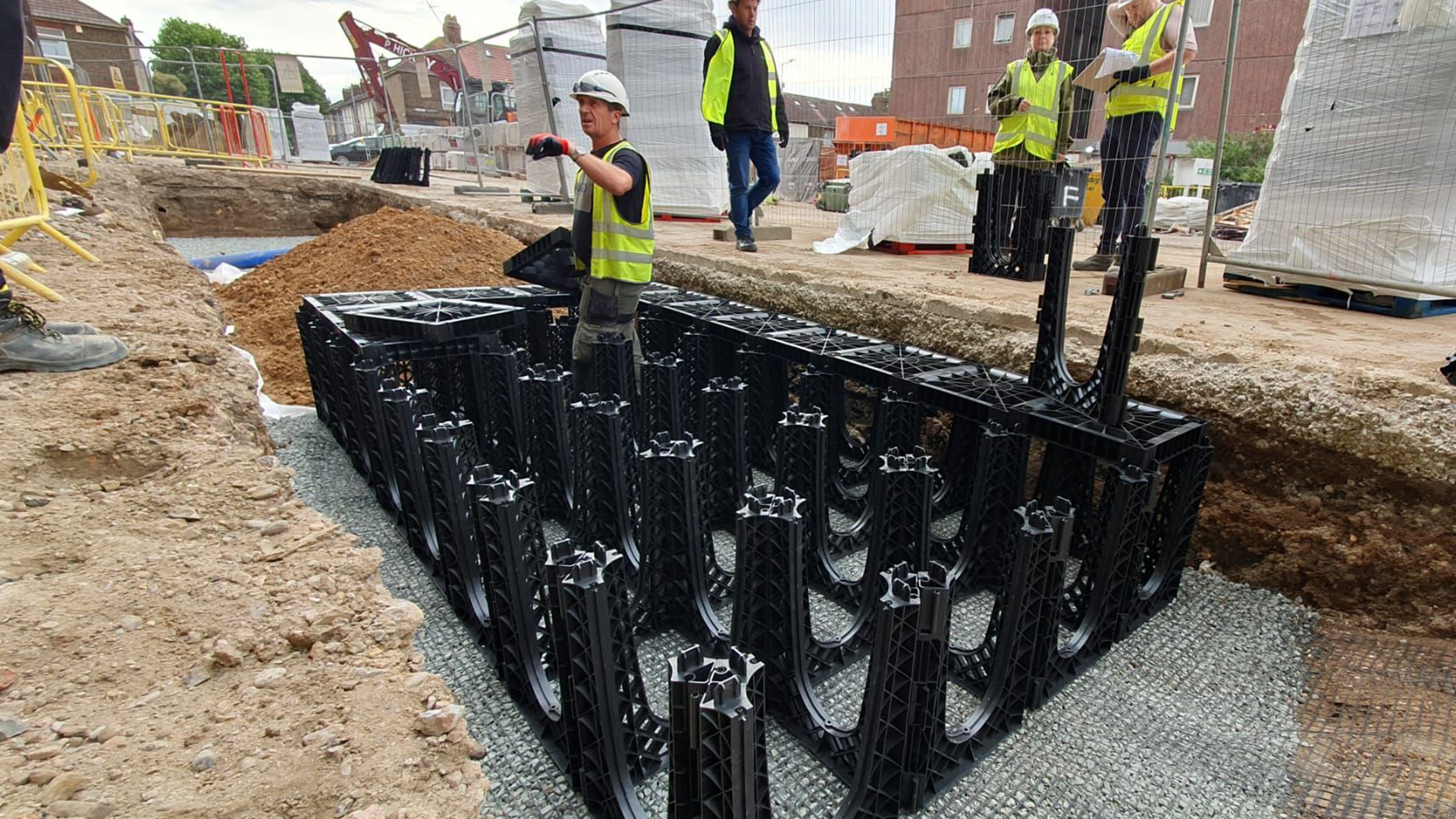
The understanding of how soil structure affects tree success is supported by a growing body of field observation and practical experience. Across many urban planting schemes, practitioners have noted that tree performance is closely linked to soil compaction and available rooting volume. Where soils are heavily compacted or restricted, trees tend to establish more slowly and show reduced vitality over time.
By comparison, projects that incorporate uncompacted soil within structural support systems have generally shown stronger establishment and more consistent canopy development. These observations come from a range of long-term schemes in the UK and Europe, where maintenance teams and designers have tracked performance over many years.
Although much of this evidence is experiential rather than derived from formal experimental trials, it points to a clear principle: soil health and structure are critical to long-term tree success. Replanting into the same compacted or poorly aerated soil conditions rarely produces different results, emphasising the importance of getting the soil right at the outset.
Balancing Engineering and Ecology
Engineering solutions have an essential role in urban tree design. Structural cells and engineered support systems provide the stability and load-bearing capacity required beneath pavements and roads. The key is ensuring that these systems are designed around the biology of the tree rather than expecting the tree to adapt to the system.
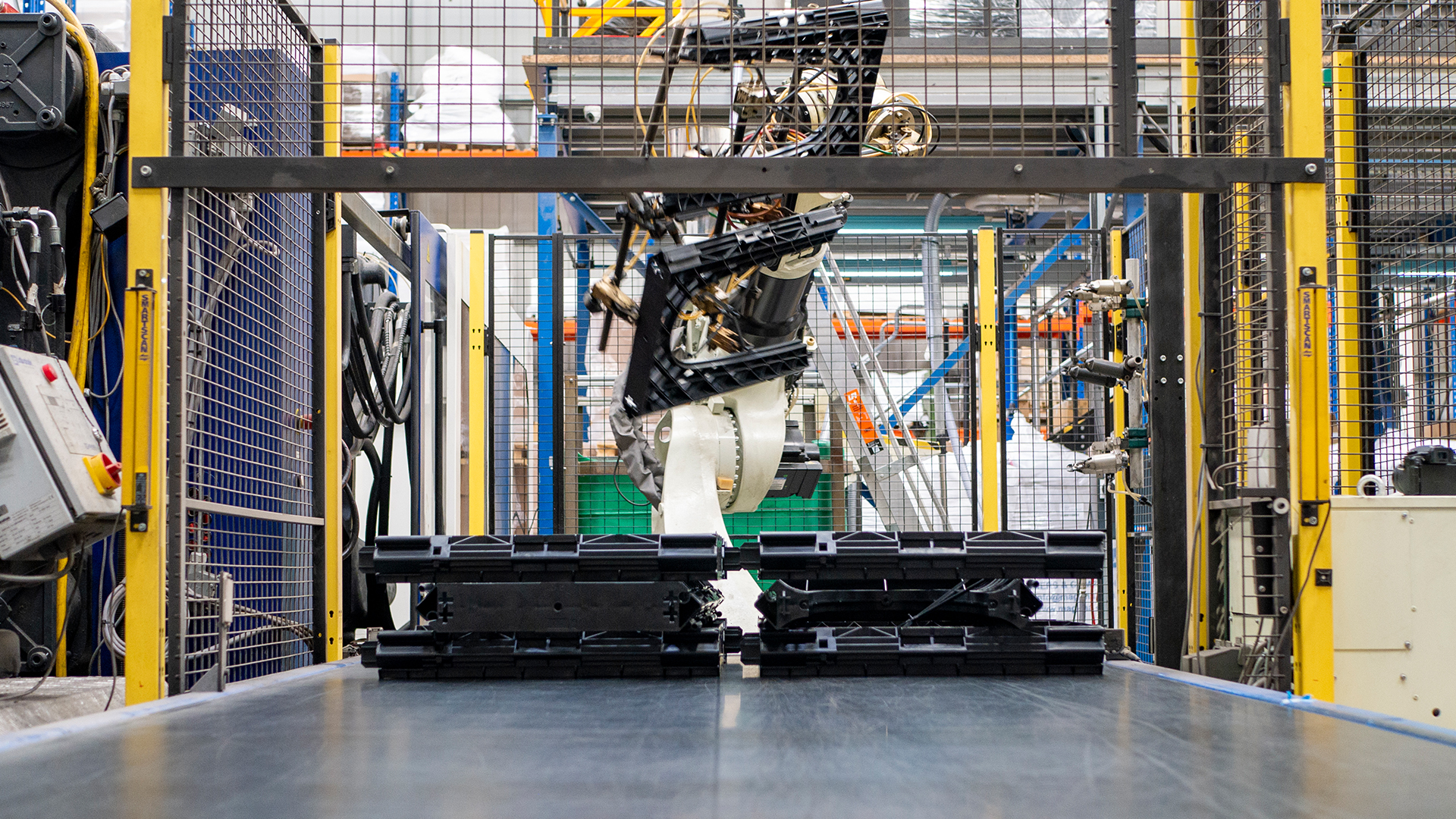
There is also some unease about the use of plastic in these systems. From GreenBlue Urban’s experience, responsibly designed plastic components made from high-quality recycled or recyclable polymers provide exceptional strength, durability and consistent performance. Because GBU selects and controls the quality of its feedstock, the resulting components meet demanding engineering requirements without relying on virgin plastics. This creates a genuinely circular material flow that keeps resources in use for as long as possible.
The environmental benefits extend further. Using recycled polymers and manufacturing in the UK cuts transport emissions and significantly reduces embodied carbon compared with imported products or systems made from short-life materials. These long-lasting units remain in service for decades, which avoids repeated excavation, replacement and replanting. Over the lifespan of a project, this prevents large volumes of waste and avoids the substantial carbon cost associated with frequent interventions.
Strong, durable and circular plastic systems can therefore provide both engineering reliability and environmental value. When the engineering framework supports the natural function of soil rather than restricting it, urban durability and ecological health can coexist.
The Case for Proven Systems
Innovation is vital, but it must be grounded in evidence. The urban tree planting sector has occasionally been influenced by new proprietary mixes or systems promoted as breakthrough solutions. Many of these approaches, however, lack the long-term track record required to justify their claims.
Uncompacted soil systems have decades of proven success across a wide range of conditions. They are established, with a consistent record of delivering predictable, repeatable outcomes that lead to strong, healthy and resilient trees.
Looking Forward
As urban greening becomes central to climate adaptation strategies, the stakes are higher than ever. Cities cannot afford to plant trees that fail. Budgets, public trust and environmental goals depend on ensuring that the trees planted today will thrive for generations.
The path forward lies in prioritising natural soil function, designing systems that preserve aeration and porosity and avoiding unnecessary compaction. Proven methods supported by both data and real-world performance provide the most reliable foundation for success.
By building on the principles of uncompacted soil, urban landscapes can be created that perform well from the outset and continue to provide ecological, social and carbon benefits long into the future.
