


For decades, the way we designed drainage in our towns and cities followed a simple principle: get water away from buildings as quickly as possible. Pipes, tanks and underground infrastructure were designed to move rainwater off site and into sewers or nearby watercourses.
But what we have learned over the last few years is that the first few millimetres of rain are often the most polluted.
This discovery has changed how engineers, planners and designers think about urban drainage. And in the UK, it has shaped national frameworks.
The result? A small number, 5 mm, has become one of the most important figures in modern drainage design.
The problem: the dirtiest rain falls first
When rain falls in towns and cities, it doesn’t land on clean ground.
It hits:
- roads and car parks
- pavements
- brake dust, tyre particles and oil residue
These surfaces carry contaminants like silt, and it builds up on surfaces during dry weather. When rain arrives, it is washed away into drainage systems.
Studies of urban runoff have shown that the earliest part of a rainfall event carries a large proportion of pollutants. In many cases, the first few millimetres of rainfall wash most contaminants from urban surfaces into drains and watercourses.
This is often referred to as the “first flush.”
Without treatment, this polluted water can enter rivers, lakes and coastal environments. Contributing to declining water quality, ecosystem damage and increased treatment costs for water companies.
In simple terms: the first rain is often the most toxic.
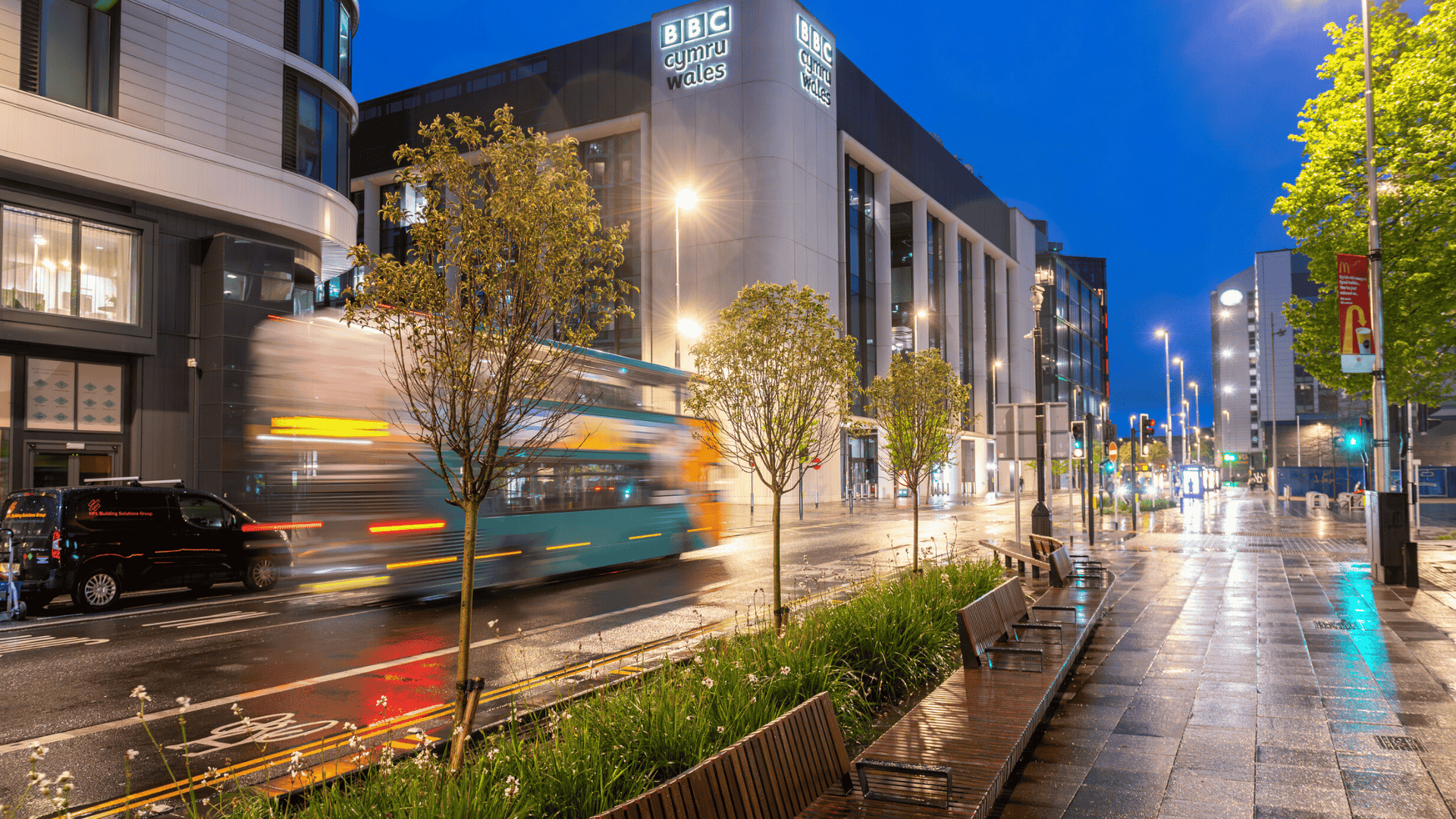 Wood Street, Cardiff.
Why 5 mm matters?
In drainage design, a useful threshold is detailed: the first 5 mm of rainfall.
Capturing this initial rainfall can significantly reduce the pollution entering waterways because it intercepts the water that washes contaminants from urban surfaces.
And importantly, many rainfall events are small. Managing the first few millimetres means managing a large proportion of everyday rainfall events.
This insight has gradually shaped sustainable drainage guidance and design practices across the UK.
The SuDS standards: a shift in policy
In 2025, the UK government introduced updated National Standards for Sustainable Drainage Systems (SuDS).
One of the most significant sections is Standard 2: Management of Everyday Rainfall, which requires developments to intercept at least the first 5 mm of rainfall on site.
This means that, for most rainfall events:
- rainwater should not immediately leave the site
- it should instead be reused, infiltrated or managed within SuDS features
The standard also sets performance expectations:
- 80% interception in summer
- 50% interception in winter
In practical terms, this pushes developments towards solutions such as:
- rain gardens
- tree pits and bioretention systems
- permeable paving
- green roofs
- rainwater harvesting systems
- above-ground attenuation planters
These approaches slow down water, filter pollution and mimic natural drainage processes rather than relying solely on underground pipes.
The change signals a wider shift in thinking. Drainage systems are no longer just about preventing floods, they are also about protecting water quality, improving biodiversity and creating better places.
 GreenBlue Urban ArborFlow System diagram
What this means for designers and developers
For architects, engineers and local authorities, the implications are clear.
Drainage must be considered earlier in the design process.
Surface water strategies need to:
- manage rainfall where it lands
- integrate drainage with landscape design
- treat water before it leaves a development
This is a move away from hidden infrastructure towards visible, nature-based solutions that provide multiple benefits.
How nature-based SuDS help solve the problem
Nature-based SuDS are particularly effective at managing the first 5 mm of rainfall because they slow, filter and store water close to where it falls.
Features such as tree pits, rain gardens and bioretention systems:
- capture runoff from streets and paved areas
- filter pollutants through engineered soil and vegetation
- allow water to infiltrate or rehydrate soils naturally
- release excess water slowly during larger storms
- evapotranspiration with planting
These systems replicate how water behaves in natural landscapes, meaning rain is absorbed by soil and vegetation rather than immediately entering drainage networks.
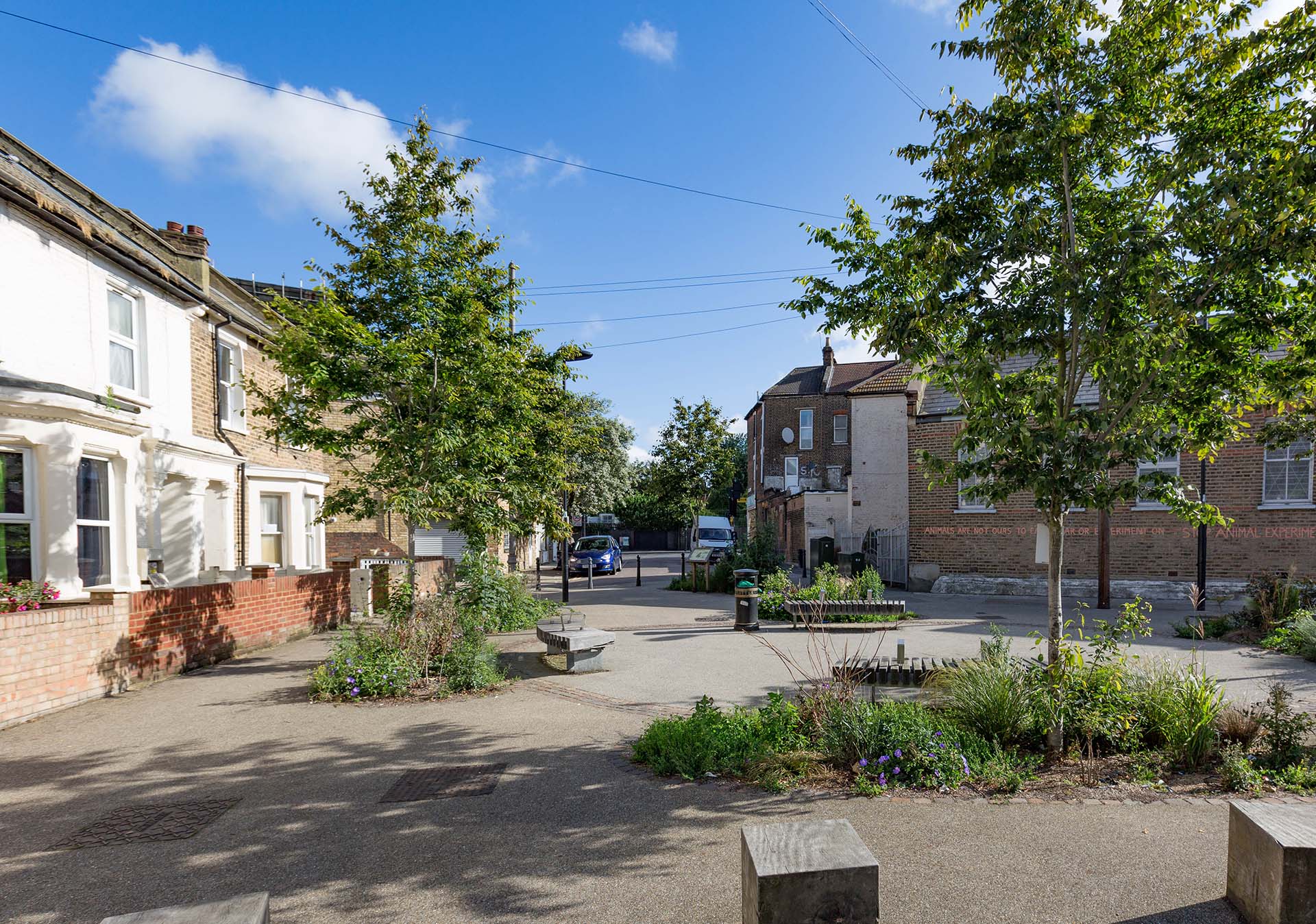
GreenBlue Urban: supporting the new approach
At GreenBlue Urban, many of our systems are designed specifically to support source-control drainage; capturing and managing water at the surface.
Our products help deliver the principles behind the 5 mm interception standard by:
Integrating drainage and trees
- Tree pit systems can capture and store stormwater while supporting healthy urban tree growth. Trees and engineered soils filter pollutants and encourage infiltration.
Providing underground storage where space is limited
- Structural soil cells and stormwater management systems create subsurface storage beneath pavements and streetscapes.
Supporting nature-based drainage
- Systems such as rain gardens and above-ground attenuation help intercept rainfall, improve water quality and enhance biodiversity.
These solutions help developments meet modern drainage standards while also delivering wider benefits, from improved urban cooling to better public spaces.
A small number with big implications
At first glance, 5 mm doesn’t sound like much.
But it represents a renewed fundamental shift in how we think about water in our cities.
By capturing and treating the first few millimetres of rainfall, we can dramatically reduce pollution entering our rivers and create more resilient urban environments.
For designers, developers and local authorities, the message is clear:
The future of drainage is not just about moving water away. It’s about working with nature to manage it where it falls. And sometimes, the biggest changes start with just 5 millimetres of rain.
